The digital signage industry has been growing steadily for years now, and it shows no signs of stopping anytime soon. Businesses all over the world are investing in digital signage systems, be it for advertising, internal communication, or customer services. With centralized management, organizations can oversee multiple locations from a single interface, ensuring ease of use, quick issue resolution, and comprehensive performance monitoring.
Digital signage offers significant advantages over traditional static signage and traditional media such as print, radio, or television, delivering greater brand awareness, higher recall, and increased engagement. The ability to deliver real-time, personalized content means that the quality and relevance of the content displayed are crucial for effectively engaging audiences and achieving marketing goals.
However, if you're still on the fence about investing in digital signage for your business, we're sure these digital signage benefits and statistics will help you decide.
However, if you’re still on the fence about investing in digital signage for your business, we’re sure these digital signage benefits and statistics will help you decide.
Introduction to Digital Signage
You know, digital signage has really flipped the script on how organizations talk to people, honestly. It's like trading in your old flip phone for a smartphone; suddenly, you've got this dynamic alternative to those boring static signs that just sit there doing nothing. Think about it: with digital screens like monitors, TVs, or those big LED walls, businesses can push out real-time, personalized content that actually grabs your attention and gets you engaged.
It's not like those old-school static signs where someone has to manually update everything and reprint stuff, that's such a hassle, right? Digital signage lets you change content instantly from one central spot, which saves you both time and money. And honestly, that cost-effectiveness is pretty attractive if you're trying to get the most bang for your buck with marketing and boost brand awareness.
Whether you're using it for advertising, talking to your team internally, or just helping people find their way around, digital signage helps you connect with your audience in ways that actually mean something, boosting performance and building that loyalty you're after. So yeah, digital signage has basically become this essential tool that organizations can't really live without if they want to stay visible and deliver messages that pack a punch in today's crazy, fast-paced world.
Benefits of Digital Signage
The digital signage market continues its strong growth trajectory. According to recent market research, the global digital signage market was valued at approximately $29.19 billion in 2025 and is projected to reach $54.69 billion by 2034, reflecting a compound annual growth rate of 7.41%. This represents consistent expansion from the market's 2024 valuation of $27.13 billion.
Digital signage is a great solution for businesses seeking to improve communication and engagement. Such a large market share wouldn't be possible if digital signage didn't bring numerous benefits to businesses around the globe. Industry research from recent years shows that as many as 64% of businesses that use digital signage have reported that customer engagement has increased. Similarly, studies indicate that around 84% of businesses claim digital signage provides a better brand awareness boost than other conventional advertising channels. The pros of digital signage include its ability to quickly capture attention, deliver dynamic content, and adapt messaging in real time.
But businesses are not the only ones to claim that digital signage is effective. Research has shown that approximately 80% of consumers have entered a store because they saw its digital sign. The same percentage of consumers report being more likely to buy an item in a store if there is a digital sign present, showing how digital signage can influence purchasing decisions and drive unplanned purchases.
Of course, it's not all about the money. Industry research has shown that safety and health messages on digital signage can reduce accident and sickness rates by 20%. Additionally, digital signage can be used to promote important events, such as sales, specials, or seasonal campaigns, ensuring customers are informed about timely happenings.
Digital Signage vs Traditional Signage
You know, when you really think about comparing digital signage to those old-school static posters and banners, the benefits of going digital become pretty obvious pretty fast. Traditional static signage, like those printed posters or fabric banners you see everywhere, honestly just can't keep up anymore. It's kind of stuck in one place, can't adapt to different situations, and definitely can't deliver the timely, relevant info that people actually want these days.
And don't even get me started on updating static signage, it's both a pain in the wallet and a huge time sink, since you're constantly needing new materials and having to reinstall everything. Digital screens, though? That's where things get interesting. They offer this unmatched flexibility that lets businesses really maximize their reach by throwing up eye-catching graphics, engaging videos, and interactive content that you can update in real time, just like that.
It's not just about cutting costs over time (though that definitely happens), but it's more about how brands can deliver those personalized messages that actually connect with people and stick in their minds for better brand recognition. When you leverage digital signage the right way, organizations can engage customers in ways that feel fresh and innovative, making sure their messaging stays relevant and effective, no matter where they're setting up shop.
Digital Signage Statistics in 2025
Are you interested in some more digital signage stats? We've crunched the numbers below.
The digital signage market has seen rapid growth in recent years, with businesses increasingly adopting these solutions to engage customers and improve communication. However, many organizations face the challenge of implementing digital signage effectively, whether due to technical design issues, creating engaging content, or measuring the success of their initiatives.
Note: The following statistics represent industry research conducted between 2022-2025. While market conditions evolve, these figures reflect widely cited benchmarks used by digital signage professionals to measure effectiveness and ROI.
Education Digital Signage Statistics
Studies show that 96% of students believe video content enhances their learning experience, demonstrating how digital signage brings essential advantages for educational engagement.
Research indicates that 73% of educational institutions view digital signage as crucial for future communication development and expect it to remain relevant moving forward.
Approximately 70% of colleges have implemented digital signage displays on campus to improve communication with students, staff, and visitors.
Educational institutions using digital signage report a 30% improvement in student engagement, and digital signage enables teams to collaborate and share information more effectively across departments.
Healthcare Digital Signage Statistics
70% of hospitals in the US have digital communication systems.
75% of patients and healthcare staff claim that digital signage content, delivered through devices such as screens, sensors, or counters, improves their experience at a hospital.
Research shows that the same percentage can recall at least one message they have seen on a digital sign in a hospital. Tracking visitors using these devices helps assess the effectiveness of digital signage in hospitals.
Studies indicate that digital signage has improved the performance of healthcare institutions that have implemented digital signage.
Industry research shows that digital communication impacts patient choices and experience, with a significant percentage of patients reporting full engagement with a hospital’s digital signage content.
Hospitality Digital Signage Statistics
According to 2024-2025 market research, the global hospitality digital signage market is experiencing significant growth, with the digital menu board segment valued at approximately $2.5-3.0 billion in 2024 and projected to reach $4.0-5.4 billion by 2032-2033.
Industry studies indicate that digital menu boards in restaurants and bars can significantly increase sales, especially by showcasing and dynamically updating pricing to influence customer choices. Research shows that approximately 30% of diners report that digital menus influence their purchase decisions.
Studies suggest that digital menu boards typically deliver a 5% sales lift for restaurants.
Research shows that a significant majority of patrons believe technology makes the experience of dining in a restaurant better.
70% of hotel guests find digital signage engaging. Digital signage can also encourage repeat visits by improving the overall guest experience and satisfaction.
Industry surveys indicate that over half of respondents would be more likely to book a hotel with a self-checkout kiosk.
Retail Digital Signage Statistics
According to 2024 industry research, the retail sector accounts for approximately 21% of the digital signage market, making it one of the largest segments.
Studies from 2023 indicate that retailers using digital signage experienced an average sales increase of 32%, demonstrating the significant impact on revenue generation.
Research shows that customers who have been exposed to digital signage in a store are more likely to become repeat buyers, with some studies citing increases of approximately 33%.
Industry reports suggest that retail stores can experience up to 24% increased foot traffic as a result of implementing digital displays, especially when utilizing multiple screens to maximize visibility and engagement.
Research indicates that retailers experience significant improvements in customer satisfaction due to digital signage. Digital posters are particularly effective in capturing customer attention and delivering targeted messages.
Corporate Digital Signage Statistics
According to 2024-2025 research, improving internal communication through digital signage can boost employee productivity by up to 25%. Digital signage systems can also integrate with other platforms, allowing for seamless content sharing and integration across devices.
Over 50% of teams are planning to increase their usage of digital signage in internal communication, based on recent industry surveys.
Research indicates that approximately half of communications professionals currently use digital signage as part of their strategy.
Studies show that 60% of employees feel more motivated to work when shown appreciation through digital signage messaging.
Industry research on employee engagement and digital signage shows significant increases in workplace engagement, though it's important to note that overall employee engagement levels have fluctuated in recent years, with 2024 data showing only 23% of employees globally are actively engaged at work. Digital signage remains an important tool for improving internal communication and recognition.
Creating Effective Content
You know, crafting content that really works for digital signage isn't just about throwing something flashy on a screen; it starts with honestly understanding who's going to see it and where these screens are actually sitting. First off, you've got to have the technical chops to pump out graphics, videos, and interactive stuff that's both crystal clear and genuinely compelling (nobody wants to squint at blurry content, right?). Here's where things get interesting: using analytics and tracking tools is kind of like having a behind-the-scenes assistant that shows you exactly how your content's performing, so you can make those smart, data-driven tweaks that really maximize impact.
And honestly, when you throw in some social media integration and cross-promotion, it's like adding rocket fuel to your brand's reach; suddenly, more people are stopping to engage with what you've put up there. The trick is planning content that's snappy, visually appealing, and feels true to your brand, creating this seamless experience that doesn't just inform people but actually nudges them to take action. It's that sweet spot between creativity and strategy that makes your digital signage stand out from the noise and deliver results you can actually measure.
Performance Tracking and Analytics
Look, if you really want to get the most bang for your buck from your digital signage setup, you've got to dive into performance tracking and analytics. Honestly, it's kind of a game-changer. With the right tools in your corner, you can keep tabs on key stuff like how engaged your audience actually is, whether your content's playing smoothly, and most importantly, if people are actually converting after seeing your displays. It's a bit like having a dashboard that shows you what's working and what's... well, not so much.
These insights give you the power to make smart, informed decisions instead of just guessing, and you can fine-tune your content strategy until it really hits the mark. By spotting engagement patterns and tracking how different campaigns perform, you're basically setting yourself up to optimize your signage for whatever comes next. This whole data-driven approach doesn't just help you justify why you spent money on digital signage in the first place; it also makes sure your messaging keeps evolving and delivering real value as time goes on, which, honestly, is what every business needs these days.
Future of Digital Signage
You know, the future of digital signage is looking pretty exciting, honestly. There's all this new tech and trends happening that's really going to change how businesses connect with their audiences, and it's not just about flashy screens anymore. Personalized content is becoming a huge deal, you know? It's kind of like how Netflix suggests shows just for you, but now businesses can tailor their messages to specific groups and really grab people's attention in ways that actually matter.
What's really cool is how these systems are starting to work together with other tools, think social media, customer management systems, even inventory tracking, so everything feels connected and smooth, which honestly just makes brands more visible and keeps customers coming back.
And here's where things get interesting: artificial intelligence and machine learning are jumping into the digital signage game too, providing real-time tweaks and smarter ways to deliver content that actually hits the mark. As all this stuff keeps developing, businesses that stay on top of what's happening are going to be the ones who really maximize what their digital signage can do, making sure their brand stays fresh and their messaging keeps working well into the future.
Reap the Benefits of Digital Signage With Rise Vision
Ready to implement your first digital signage system? With Rise Vision, you get an all-in-one solution for your signs, including easy-to-use free digital signage software, a comprehensive content management platform, a signage content creation tool, and so much more. Book a free demo today to see for yourself what Rise Vision can do for your business.
More From Our Blog
-
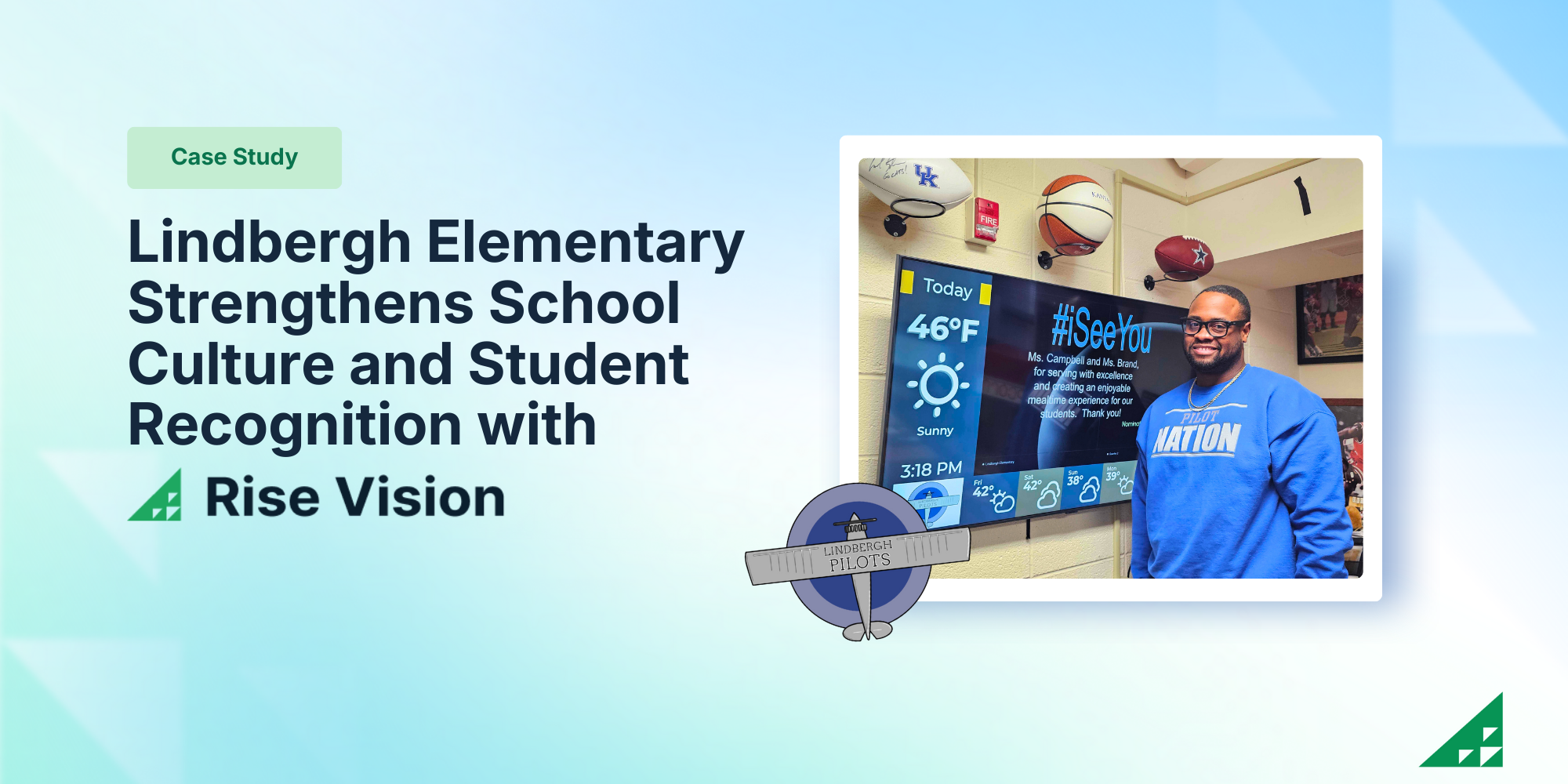
Lindbergh Elementary Strengthens School Culture and Student Recognition with Rise Vision
Lindbergh Elementary is the smallest school in Kansas City Kansas Public Schools, serving approximately 175 students. The small but mighty school is led by Principal Dr. Dustin Wiley who is known for[…]
Read More -
%20(1).png)
What’s New at Rise Vision: Q1 2026 Feature Roundup
At Rise Vision, we believe that effective communication should be simple, affordable, and impactful. Whether you’re a school keeping students safe or a business engaging a deskless workforce, your[…]
Read More -
Best Cloud-Based Digital Signage Software
Managing screens across a building, a campus, or a dozen facilities used to mean someone physically touching each display every time something changed. Cloud-based digital signage software removes[…]
Read More
12,300+ Organizations Trust Rise Vision, You Can Too





























Schedule a Free Demo
You deserve the #1 all-in-one platform for digital signage, screen sharing, and emergency alerts.